
Mechanical Workshop Tools for Training Workshops: What to Buy and What to Check
A training workshop is where students first shape metal, measure a part, and join components by hand. The mechanical workshop tools they use shape both the quality of that learning and how safe it is. This guide lists the tools a college or TVET workshop usually needs, the specs worth checking, and what to include when you ask for a quote.
Which workshops need which tools
Most engineering and vocational programmes run several specialised shops, each needing its own set of tools, though some general-purpose items are shared.
- Fitting shop: filing, sawing, marking, drilling, and tapping by hand.
- Sheet metal shop: cutting, bending, and joining thin sheet.
- Welding shop: arc and gas welding, with heavy safety needs.
- Machine shop: lathes, drilling machines, and grinders, plus their tooling.
- Automotive and maintenance shop: lifting, fastening, and service work on engines and vehicles.
Mechanical workshop tools by type
Hand tools
Hand tools are worked by hand for gripping, turning, striking, cutting, and marking. They are the first tools a trainee learns. A basic set includes:
- Spanners and wrenches: open-end, ring, combination, and adjustable
- Screwdrivers: flat and cross-head in several sizes
- Pliers: combination, long-nose, and side cutters
- Hammers: ball-peen for metalwork and soft-faced for assembly
- Chisels, punches, files, and a hacksaw
- Allen keys for socket-head screws

Measuring and marking tools
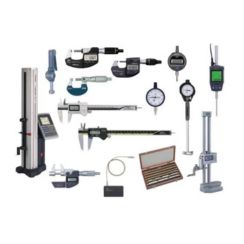
Accurate work starts with accurate measurement. These measuring instruments let trainees check size, flatness, and angle.
- Steel rule and tape measure
- Vernier caliper, commonly reading to 0.02 mm or 0.05 mm
- Outside micrometer, commonly reading to 0.01 mm
- Dial indicator with a magnetic stand
- Try square, scriber, centre punch, and surface plate
- Spirit level for setting up machines and work
Power tools
Power tools add speed for drilling, cutting, and grinding. Common items are a bench drill, a portable drill, an angle grinder, and a bench grinder. Each should have its guard in place, and trainees should use them only after a supervised induction and in line with the tool maker's manual.
Hydraulic and lifting tools
An automotive or maintenance shop needs tools that lift and press with oil under pressure. Typical items are a hydraulic jack, a floor jack, a hydraulic press for fitting bearings, and a chain hoist or engine crane. Check the rated load on each and make sure it is marked on the tool.
Fastening, pneumatic, and cleaning tools
A rivet gun and nut drivers join parts. Where the shop has compressed air, an air impact wrench and air blower are common. A parts washer and brushes keep components clean for inspection. A grease gun and oil can cover lubrication.
Safety equipment
Every shop needs safety glasses, ear protection, work gloves, and safety shoes. Welding shops also need helmets or face shields with the right filter, and fire-resistant aprons. Your safety officer should decide the full list for each shop.

Specs that matter when buying mechanical workshop tools
| Tool type | What to check |
|---|---|
| Spanners and wrenches | Forged steel, often chrome vanadium; sizes marked clearly; metric or imperial as your course needs |
| Hammers and chisels | Hardened and tempered heads; handles fixed firmly |
| Pliers and cutters | Hardened jaws; insulated grips where electrical work is taught |
| Measuring tools | Stated resolution and range; a case to protect them |
| Hydraulic tools | Rated load marked; safety valve or overload protection |
| Power tools | Voltage and plug type for your country; guards fitted |
For live electrical work, insulated hand tools are covered by IEC 60900. If your course includes that work, name the standard in the spec so bidders price the right tools.
Safety in the training workshop
Hand tools cause injuries when they are worn, the wrong size, or used for the wrong job. Build a simple routine: inspect tools at the start of each session, remove damaged ones, and store them on shadow boards so gaps are easy to spot. For hand and power tools, US workplaces follow OSHA 29 CFR 1910 Subpart P (sections 1910.241 onward), including OSHA 29 CFR 1910.242 on hand and portable powered tools. Your own national rules and your institution's safety officer come first.
Care, calibration, and replacement
Precision measuring instruments drift with use, so schedule periodic calibration against reference gauges and record the results. Clean and lightly oil calipers and micrometers before storage, and keep them in their cases away from abrasive dust. Budget for replacing consumable items such as hacksaw blades, files, drill bits, and grinding wheels every term, since these wear out far faster than the main tool kit.
What to send when you ask for a quote
- A tool list for each shop, with quantities per trainee or per bench
- Size ranges, for example spanners from 6 mm to 32 mm
- Metric or imperial, and any insulated or non-sparking needs
- Power supply details for any power tools
- Delivery country and any tender reference
Our catalog lists a hand tools set covering spanners, pliers, screwdrivers, wrenches, hammers, chisels, cutters, and Allen keys, and a range of measuring instruments. You can include the other mechanical workshop tools from this guide in the same request, and the quote will confirm which items we can supply. For the wider picture, browse our mechanical lab equipment range and read the TVET lab safety guide.
Prices are on request, by quantity, specification, and destination. Send your tool list for a quote, or see lab tender support for public bids.