
Primary Chemistry Lab Equipment for Colleges: The Core List and the Practicals It Supports
A college chemistry course moves beyond school demonstrations to measured, quantitative work. Students titrate to a sharp end point, weigh to a tenth of a milligram, and prepare exact standard solutions. That shift changes what chemistry lab equipment for colleges must do. This guide lists the core items, explains what each one is for, and links each to the practicals it supports.
What sets a college chemistry lab apart
Chemistry is the study of matter and how it changes in reactions. At college level, students must also report results with a known level of uncertainty. So chemistry lab equipment for colleges is judged on accuracy: glass grade, balance readability, and build quality all count.
College labs also serve more students per week. Items need to be sturdy, easy to clean, and easy to replace. A clear core list is the best starting point for a purchase plan or tender.
Weighing: balances

Electronic balance. An analytical electronic balance reads to 0.1 mg (0.0001 g). A glass draft shield keeps air currents off the pan. You need it to weigh solids for analysis and to make standard solutions. Check the capacity, readability, and how it is calibrated.
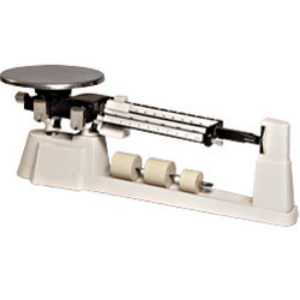
Triple beam balance. A balance with three beams. Each beam has a sliding weight. It usually reads to 0.1 g. It needs no power, so it suits rough weighing and labs with unreliable supply.

Balance counter. An equal-arm balance with a cast-iron body and brass or stainless steel pans. It is robust and handy for general weighing. You will find the triple beam balance and balance counter in the chemistry equipment category, while the balance scales category lists electronic and analytical balances.
Heating: Bunsen burner and evaporating basin
Bunsen burner. A gas burner that gives an open flame. It runs on LPG or natural gas, so specify which one your lab uses. It is named after the German chemist Robert Bunsen, who discovered caesium and rubidium with Gustav Kirchhoff. See the burners range.
Evaporating basin. A shallow porcelain dish used to boil off solvent, often water, to concentrate a solution or leave a solid behind. Crucibles, also porcelain, are used to heat solids strongly to constant mass. Both are in the basins and crucibles category.
Measuring volume: burette, pipette and volumetric glass
Burette. A long graduated glass tube with a stopcock at the bottom. It delivers a measured volume of liquid drop by drop, which makes it the key tool in titration. The burette range includes several stopcock types and designs.
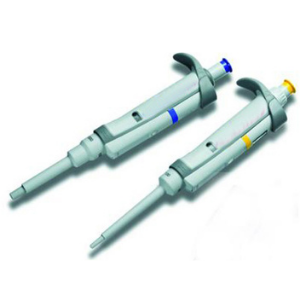
Pipette. A pipette measures and transfers a set volume. Glass volumetric (bulb) pipettes deliver one fixed volume very accurately. Graduated pipettes deliver varying volumes. Adjustable micropipettes handle microlitre volumes and are common in biochemistry.
For quantitative work, ask for Class A volumetric glassware. It has tighter tolerances than Class B, so the uncertainty in each reading is smaller. College students often have to state that error in their reports. So put the grade in the spec.
Holding and mixing: beakers, flasks and bottles
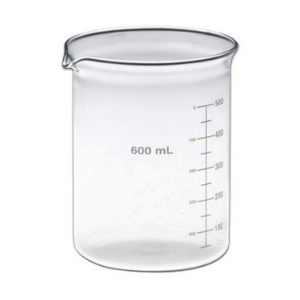
Beakers. Flat-bottomed glass vessels with a lip for pouring. They hold, mix, and heat liquids. Graduations on a beaker are only rough guides, so use a cylinder or pipette for exact volumes. Browse the beakers category.

Flasks. Flasks are used for mixing, heating, cooling, storing, and collecting. Conical flasks suit titration. Filter flasks with a side arm connect to a vacuum for fast filtration. Round-bottom flasks suit heating under reflux and distillation. See the flasks range.
Glass bottles. Reagent and media bottles store liquids and powders. Screw caps give a good seal, and amber glass protects light-sensitive reagents.
Wash bottle. A squeeze bottle with a nozzle, used to rinse glassware and wash solids off filter paper.
Separating: filter paper and funnels
Filter paper. A porous paper that lets liquid through and holds back fine solids. Grades differ in pore size and speed. Ashless grades burn away without leaving ash, so they are used when a solid is weighed after heating. See the filter papers category.
Safety wear
Safety goggles protect the eyes from splashes, fumes, and flying particles. Add lab coats and gloves suited to the chemicals in use. Your institution's safety officer should approve PPE and lab rules.
Core college practicals and the equipment they need
| Practical | Main equipment |
|---|---|
| Acid-base titration | Burette, bulb pipette, conical flask, retort stand |
| Making a standard solution | Analytical balance, volumetric flask, wash bottle |
| Gravimetric analysis | Crucible, desiccator, analytical balance, ashless filter paper |
| Purifying a solid and checking its purity | Beaker, filter flask, funnel, melting point apparatus |
| Flame tests | Bunsen burner, wire loop, spot plate |
| Supersaturation demo with sodium acetate | Beaker, hot plate, clean flask |
The sodium acetate demo shows how a supersaturated solution crystallizes suddenly when seeded, releasing heat. Flame tests show that each metal ion gives its own flame colour, the basis of emission analysis. Run all practicals under your lab's written risk assessments.
Buying chemistry lab equipment for colleges
List each item with its size, grade, and quantity per bench, then multiply by the number of benches. Add spares for glass, which breaks. State your mains voltage and gas type, the delivery country, and any tender reference.
LabExports makes and exports chemistry lab equipment for colleges from India, and prices are quoted on request. Start with the chemistry lab equipment category or the wider laboratory glassware range. For a shorter generic checklist, see our must-have chemistry lab instruments guide. If your chemical engineering department is equipping too, see our guide to chemical engineering lab equipment. When your list is ready, request a quote.